
Transparency Without Compromise
A look at the data, review process, and judgment behind the Bourbon Blue Book®.


Pulling Back the Curtain on Bottle Values
Asking prices tell you what sellers want. Completed sales tell you what buyers are willing to pay. We review secondary-market transactions and pricing trends from across the country to give collectors a clearer view of bottle values and how they’re changing.
That’s why we built the Bourbon Blue Book®: a consistent reference point in a market where prices can vary widely. And because “How do you come up with these values?” is one of our most common questions, we’re opening up the process—from the data we review to the judgment that goes into every update—so you can understand the numbers and use them with confidence.
Why Reliable Values Matter
Here’s the thing: bourbon pricing is emotional. People tie their pride (and sometimes their identity) to what their bottle is “worth.” If you spent $600 on a bottle that the Blue Book lists at $400, it stings. If you got in cheap and the value skyrockets, you feel like a genius.
But this isn’t about ego. It’s about reality. Our job isn’t to make you feel better or worse about what you own—it’s to give you the clearest picture possible. Because the only thing worse than finding out a bottle dropped in value is making decisions based on bad information.
Accuracy Matters Because:
- Collectors need real valuations for insurance or estate planning.
- Traders need a fair baseline to avoid getting fleeced.
- Retailers need to know what customers are actually willing to pay.
- Casual drinkers deserve to know if a “special” bottle is hype or substance.
"This is an excellent app! I use it almost daily to assess secondary and trade values for bottles that I cannot find locally. It's definitely worth the few bucks I pay a month, because it's saved me from overpaying a couple times. Great app and would definitely recommend!"
-One Eyed Willett
More Than Just Asking Around
The backbone of the Blue Book is data. Not rumors, not inflated Instagram “for sale” posts, not cherry-picked auction wins that make one-off bottles look like gold mines.
We source values using verified sales data. Yes, actual, completed sales, not listings. If the bottle doesn’t actually change hands, it doesn’t make the cut. It sounds simple, but the hard part isn’t gathering data—it’s cleaning it.
From Completed Sales to Bottle Values
Review the Transactions
We use verified, completed sales rather than asking prices. A seller’s listing shows what they hope to receive; a completed transaction shows what a buyer was willing to pay.
Put Prices in Context
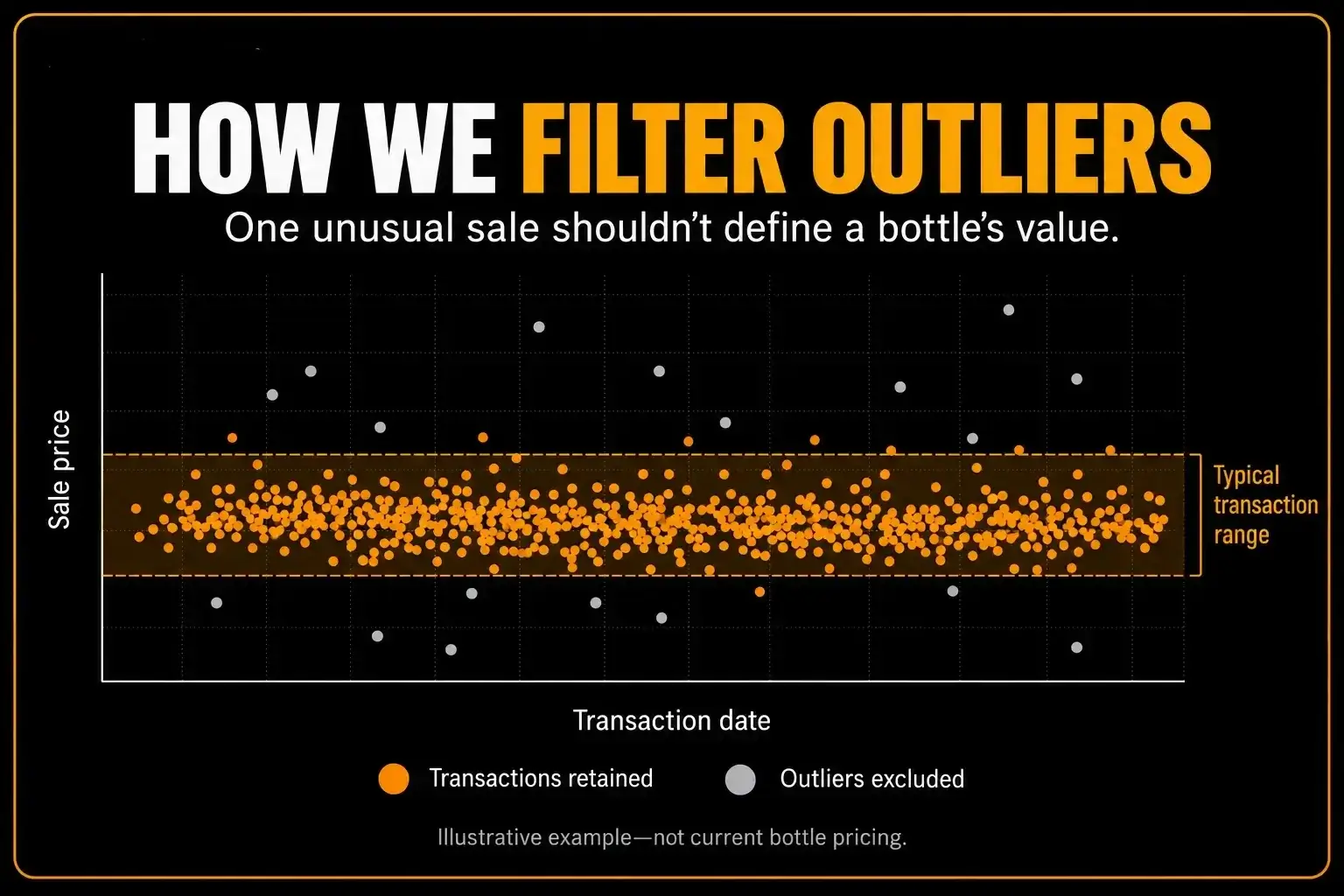
An unusually high or low sale doesn’t automatically define a bottle’s value. We compare it with other available transactions and may give it less weight when it falls outside the broader pattern.
Account for Limited Activity
Some bottles trade frequently. Others rarely change hands. When recent sales are scarce, we draw on available transaction history to establish a reference value. Those estimates carry more uncertainty, and a new sale can have a greater influence.
Provide a Reference Point
The Bourbon Blue Book® helps you evaluate a purchase, sale, or trade with a clearer understanding of the market. It’s a reference value, not a guaranteed selling price. Individual transactions can vary, so use the number as a starting point alongside the details of your specific deal.
Frequently Asked Questions
How do you value rare bottles with limited sales?
How do you handle unusually high or low sale prices?
A Better Understanding of Bourbon Starts With Better Market Data.